The 2 slit experiment for electrons
When we start to probe at the sub-atomic scale, we find that particles such as electrons and protons do not behave as tiny billiard balls. Models based on that have been found to fail.
To take a close at what electrons do is a start to finding the rules of the game which the electrons play by. One interesting and instructive way of prodding electrons is with the 2 slit experiment.
The way this experiment is set up is shown opposite.
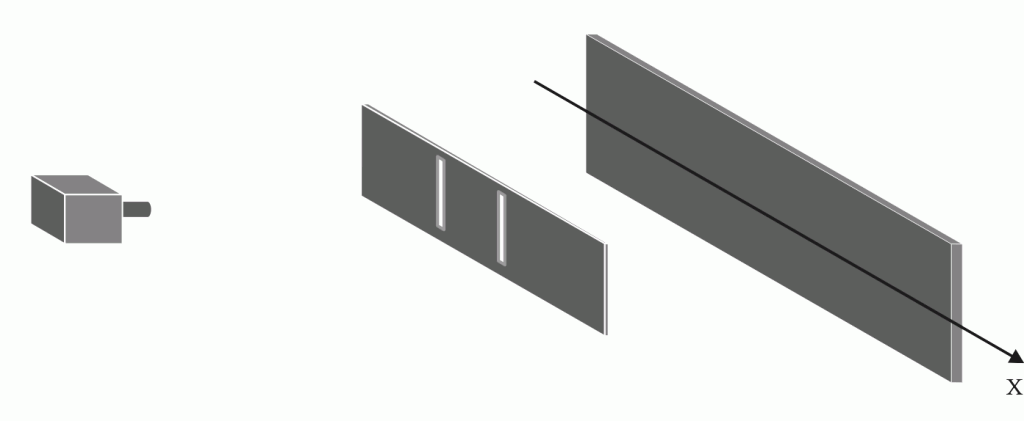
In this experiment, electrons are fired, one by one, from an electron gun, shown on the left, towards a screen on the right. In between there is a barrier with 2 slits cut out of it. The only way an electron can reach the screen is through the slits.
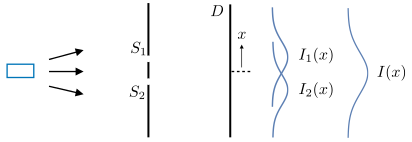
Fig 1 – I(x) is what we would expect if electrons were particles
If the electrons behaved like billiard balls then we would expect to see the sort of pattern shown opposite. The total intensity would peak half way between the position of the slits. We assume that the gun fires over a range of angles so that half of them go through each slit. We also assume that there is some scattering so, once through a slit, the electrons proceed at a range of angles.
With appropriate choice of dimensions, what we actually observe is the pattern on the right which is what we would expect for a wave. So are electrons wave packets and not particles? It certainly looks like that – if we cover up one of the slits, so that there is no chance of interference, then the patterns I1(x) or I2(x) are observed as would be expected.
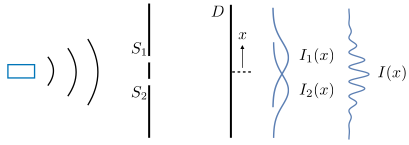
Fig 2. I(x) is what we would expect if electrons were wave packets
If the electrons were actually particles, which could only pass through one or the other slit but not both, then we could add a detector system which would allow us to know which slit it had passed through. Let’s probe a bit deeper.
Which way?
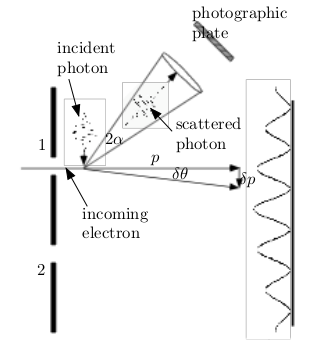
In order to see if can tell where the electrons are going, we can fire a light pulse at one of the slits such that if the electron passes through slit one, the light is scattered but if it passes through slit two, it is not.
If we do that, what we see is that the pattern seen on the screen changes from a “wave-like” pattern to the “particle-like” pattern shown in Figure 1.
What if the “which-way” information is not perfect?
We can go further. Suppose the detector is not perfect and light is only sometimes scattered even when an electron passes through slit 1. We now have some information about which slit the electron has passed through but it is not complete. What we get under these circumstances is a wave-like interference pattern but reduced in depth. The less certain we can be of where the electron is going, the more wave-like it appears.
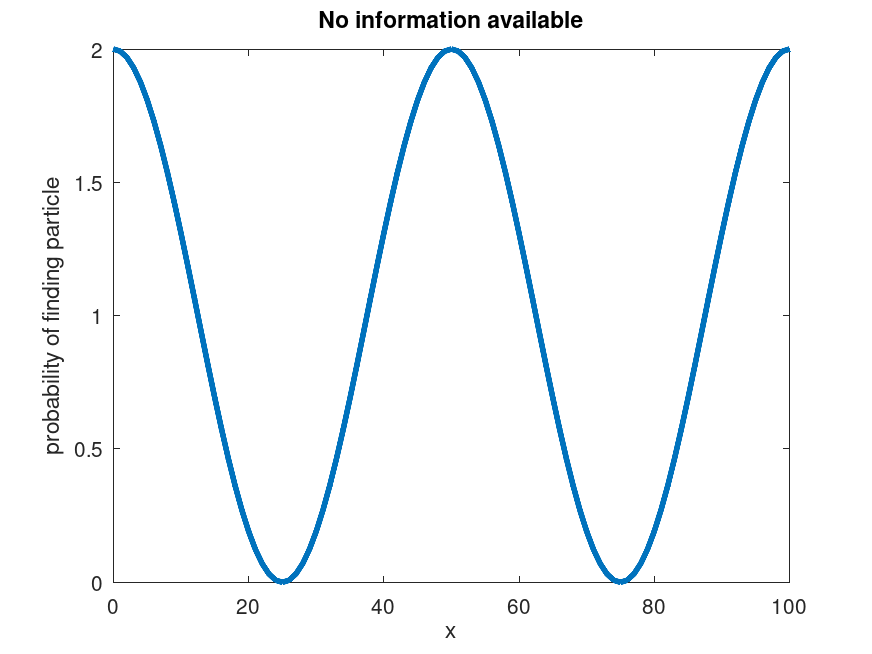
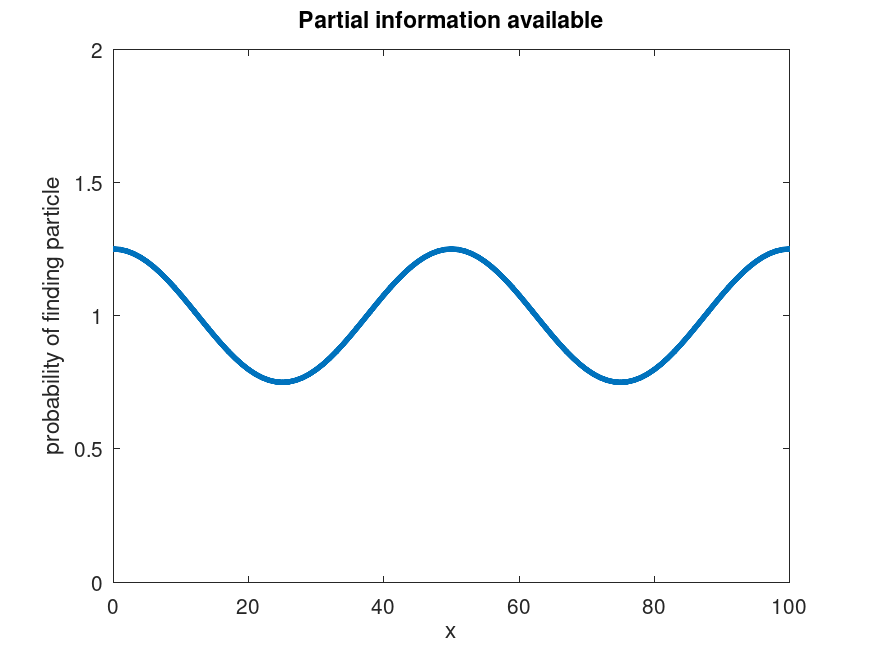
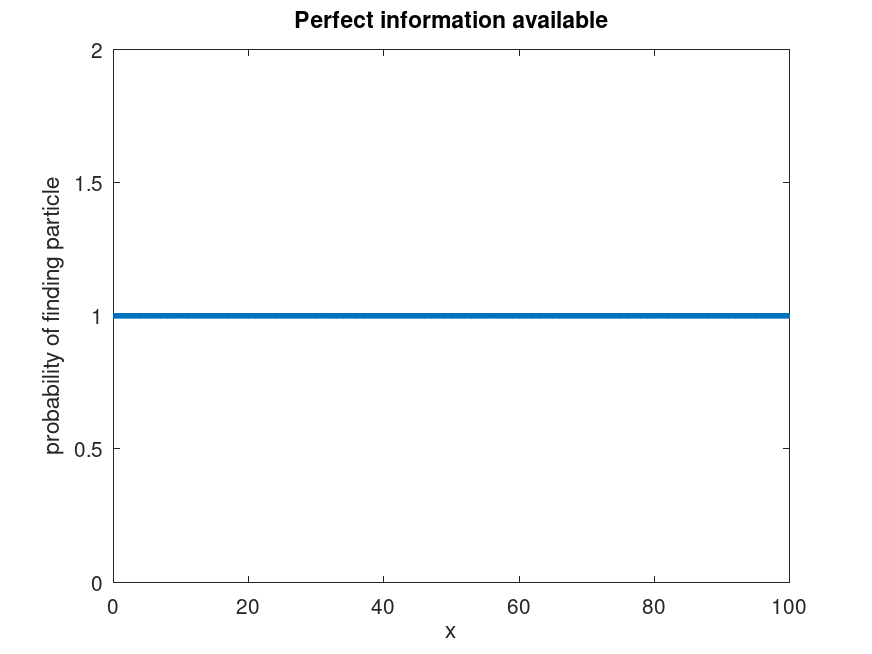
It seems that the way an electron behaves depends on how we choose to look at it. This caused much confusion in the early days which led to speculations that a conscious observer in some way controls what is going on, sometimes even affecting the behaviour of electrons in the past. More careful analysis has shown that this is not in fact the case. How the electron behaves depends purely on the arrangement of the apparatus, not on whether anyone is looking. If the scattered light goes off to infinity without encountering any other particle or measurement apparatus, the particle aspect of the electron is what is observed. As Richard Feynman wrote: “Nature does not know what you are looking at, and she behaves the way she is going to behave whether you bother to take down the data or not.”
A description of the two slit experiment and its non intuitive nature is given by Jim AlKhalili in this video.