What is the World made of?
Things are not what they seem!
When we start to prod the world to see what happens, we come across objects such as billiard balls, liquids such as water and gases such as air. Over the generations, people have found rules for how these things behave in different circumstances, such as Newton’s laws of motion and the laws of fluid dynamics. which enable us to predict what will happen if we do certain things and allow us to make systems which do what we want them to do.
As we probe deeper we find that things are not what they appear to be. First, it was discovered that all material is made up of atoms in various arrangements and that these atoms take up only a small volume of the material. Most of it, even the hardest and heaviest of materials, is made up of empty space. That is not obvious to the casual observer or directly observable but we can still find rules which allow us to correctly predict how atoms will behave under different circumstances. They are just more abstract than the likes of Newton’s Laws of Motion. The whole of Chemistry depends on it.
Probing deeper still, in the 20th Century, models were proposed for what atoms themselves were made of, in an attempt to explain why atoms behaved the way they do. Why such as chemical reactions happened and hot objects emitted light of specific colours..
Between 1911 and 1918, and following the discovery by Ernest Rutherford that the atom consisted of a small positively charged nucleus and a number of negatively charged electrons, Niels Bohr proposed what is known as the Bohr model or Rutherford–Bohr model of the atom. This model, which is based on the idea of electrons orbiting the nucleus in a way analogous to planets orbiting the sun
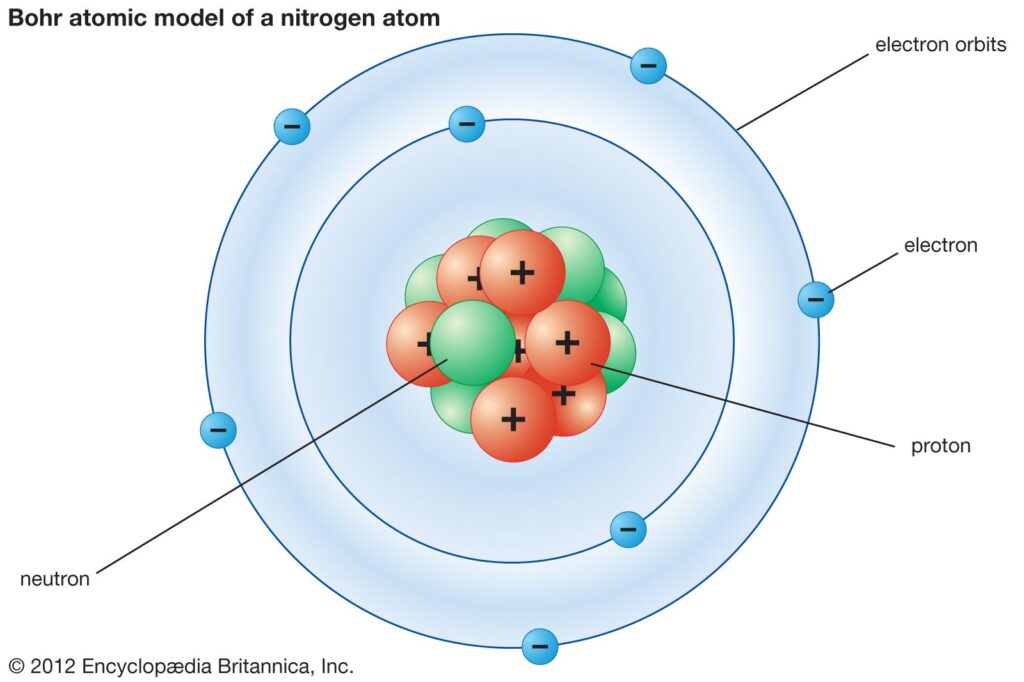
Although this model successfully predicted the observed spectral lines of the hydrogen atom, it did not correctly predict other observations. In particular, it couldn’t explain why accelerating electric charges, such as the supposed orbiting electrons, didn’t lose energy by radiation and ended up spiralling into the nucleus. Although still taught in schools, this model is obsolete.
Electrons, and other sub-atomic particles, behave very differently than planets.
Games that electrons play
To take a close at what electrons do is a start to finding the rules which the electrons play by. One good and instructive way of prodding electrons is with the 2 slit experiment.
The way this experiment is set up is shown opposite.
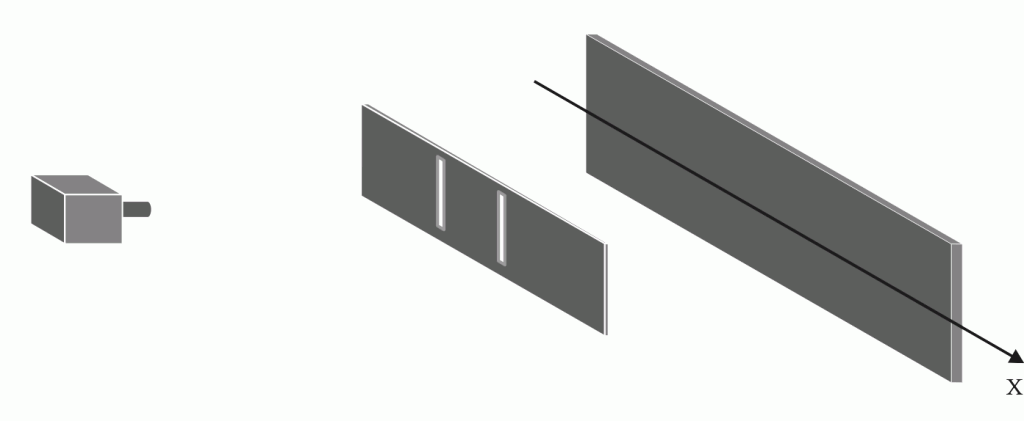
In this experiment, electrons are fired, one by one, from an electron gun, shown on the left, towards a screen on the right. In between there is a barrier with 2 slits cut out of it. The only way an electron can reach the screen is through the slits.
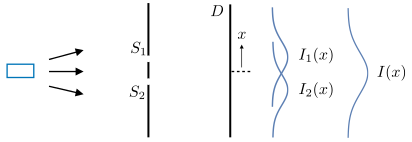
Fig 1 – What we would expect if electrons were particles
If the electrons behaved like normal particles then we would expect to see the sort of pattern shown opposite. The total intensity would peak half way between the position of the slits. We assume that there is some scattering otherwise we would see two narrow peaks instead.
With appropriate choice of dimensions, what we observe is the pattern on the right which is what we would expect for a wave. So are electrons wave packets and not particles? It certainly looks like that – if we cover up one of the slits, so that there is no interference, then the patterns I1(x) or I2*x) are observed as would be expected.
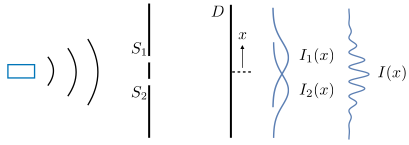
Fig 2. What we would expect if electrons were wave packets
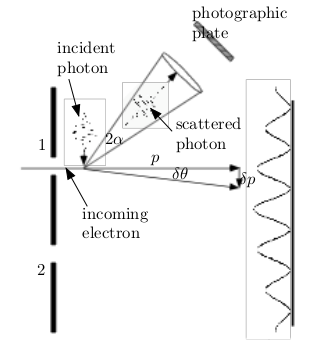
Let’s probe a bit deeper. In order to see if can see where the electrons are going, we can fire a light pulse at one of the slits. If the electron passes through slit one, the light is scattered. If it passes through slit two, it is not.
What we see is that the presence of the light pulse changes the pattern seen on the screen from a “wave-like” pattern to a “particle-like” pattern.
We can go further. If there is a probability that the electron is not detected even if it goes through slit 1, we still get a wave-like interference pattern but reduced in depth. The less certain we can be of where the electron is going, the more wave-like it appears.
It seems that how an electron behaves depends on how we choose to look at it. This caused much confusion in the early days and has led to speculations that a conscious observer in some way controls what is going on. In fact that is not the case. How the electron behaves depends purely on the arrangement of the apparatus, not on whether anyone is looking.
Suppose the scattered particle does not intercept another object. The information is still there even to be read even if nobody reads it. Moreover, if the probability of finding a scattered photon changes when the position of the electron is measured even if there is a huge distance between the two. Although this doesn’t enable information to be transmitted faster than the speed of light, it does mean that an influence can be non-local. This contradicts a deeply held expectation and causes our beliefs about the material world to be seriously questioned.